Andy Procter

Carbon Reduction Plans

Carbon Reduction Plans for UK businesses and their supply chains

A customer, a main contractor or a public buyer has asked for your Carbon Reduction Plan. This page explains what the plan has to contain, what your footprint is likely to include, and how I help you produce one that stands up when a buyer reads it.

Construction team in hi-vis jackets standing on a building site

Who is asking, and why it reaches smaller businesses

Central government buyers must ask for a Carbon Reduction Plan under Procurement Policy Note 006 when a contract is worth more than £5 million a year. Without one, a supplier cannot bid.

The requirement rarely stops there, so a business that never bids above £5 million can still be asked for a plan, often with a deadline attached.

Central government

A pass or fail condition on contracts above £5 million a year.

Main contractors

Passing the requirement on to their suppliers and subcontractors.

The NHS, councils and housing associations

Their own supplier requirements and tender questions.

Large private customers

The same question, added to supplier questionnaires.

What your footprint is likely to include

Every business is different, but most fall into one of three patterns. PPN 006 requires all of your Scope 1 and 2 emissions and five Scope 3 categories: upstream and downstream transport, waste, business travel and employee commuting. Customers increasingly ask about more than that, particularly the goods and services you buy.

Site-based contractors

Vans and site vehicles are usually the largest source, followed by plant, generators and the energy used at your unit or office. Deliveries from wholesalers, site waste and staff travel to site make up most of the rest. Materials and subcontractors are not required for PPN 006, but main contractors are starting to ask about them.

Distributors and manufacturers

Haulage in and out, warehouse and factory energy, forklifts and packaging waste tend to dominate. Where a business runs its own delivery fleet, fuel is often the single largest line.

Office-based businesses

For accountancy, recruitment, design and similar firms, commuting and business travel usually outweigh the office itself. Energy for a leased office, IT and printing come next. The footprint is smaller, but buyers still expect it measured properly.

What a compliant plan must contain

The PPN 006 technical standard is specific, and buyers check plans against it. It does not require an external audit, although the figures need to be accurate and traceable. Only five Scope 3 categories are required, though a customer may reasonably ask for more.

Net Zero commitment

A confirmed commitment to reach Net Zero by 2050 at the latest.

Your footprint

A baseline year and your current footprint, covering all Scope 1 and 2 emissions and the five required Scope 3 categories, calculated with UK Government conversion factors.

Targets and projects

Reduction targets measured against the baseline, and the carbon reduction projects you have completed and those you plan.

Sign-off and publication

Board approval and a director's signature, publication on your UK website with a clear link from the home page, and an update each year.

The hard part: your suppliers

Scope 1 and 2 come from your own bills and fuel records. Scope 3 depends on other businesses: the hauliers, wholesalers and suppliers whose emissions sit in your footprint. Getting reliable data from them is a supplier engagement job, and it is where most plans are weakest.

It is also where buyers are heading, and it overlaps with sustainable procurement: how you choose suppliers, what you ask of them and what evidence you keep.

How I help: from baseline to annual update

Each stage builds on the one before. How long it takes depends on the size of your business, the state of your records and how quickly suppliers respond, so we agree a realistic plan at the start.

1

Baseline

You share your energy bills, fuel or mileage records, vehicle list, waste notes, travel claims and commuting information. I set the boundary, agree the baseline year with you and calculate your footprint by source, in tonnes and in pounds.

2

Reduction workshop

A working session with the people who run your vehicles, premises and purchasing. Each measure agreed gets an owner, a date, a cost, a saving and a note of the evidence that will prove it.

3

The plan

Targets set from the measures you have agreed. I write the plan in the government template, prepare the director sign-off, help you publish it and give you shorter wording for tenders and questionnaires.

4

Delivery

Through the Auditel network I review spend on energy, fuel, waste and other costs, so savings can help pay for the measures. I help set up the records that show progress and check in through the year.

5

Annual update

We recalculate on the same basis, report what the completed measures achieved, re-sign and republish. A plan that shows real reductions is what a buyer comparing suppliers looks for.

After the first year, delivery and the annual update repeat. Supplier engagement runs alongside every stage, so the Scope 3 figures move from estimates towards real supplier data over time.

Three ways to get a plan

Software tools produce a footprint and a template plan from uploaded bills, with a list of suggested actions. A consultant footprint usually adds an action plan, but rarely help to deliver it or to work with your suppliers. This service covers the footprint, a workshop with your team to choose the reductions, supplier engagement on Scope 3, help to deliver the measures, and an annual update built on real results.

A plan generated from bills can meet the template. Buyers are now reading the reduction projects section closely, and a plan with nothing delivered behind it gets harder to defend each year.

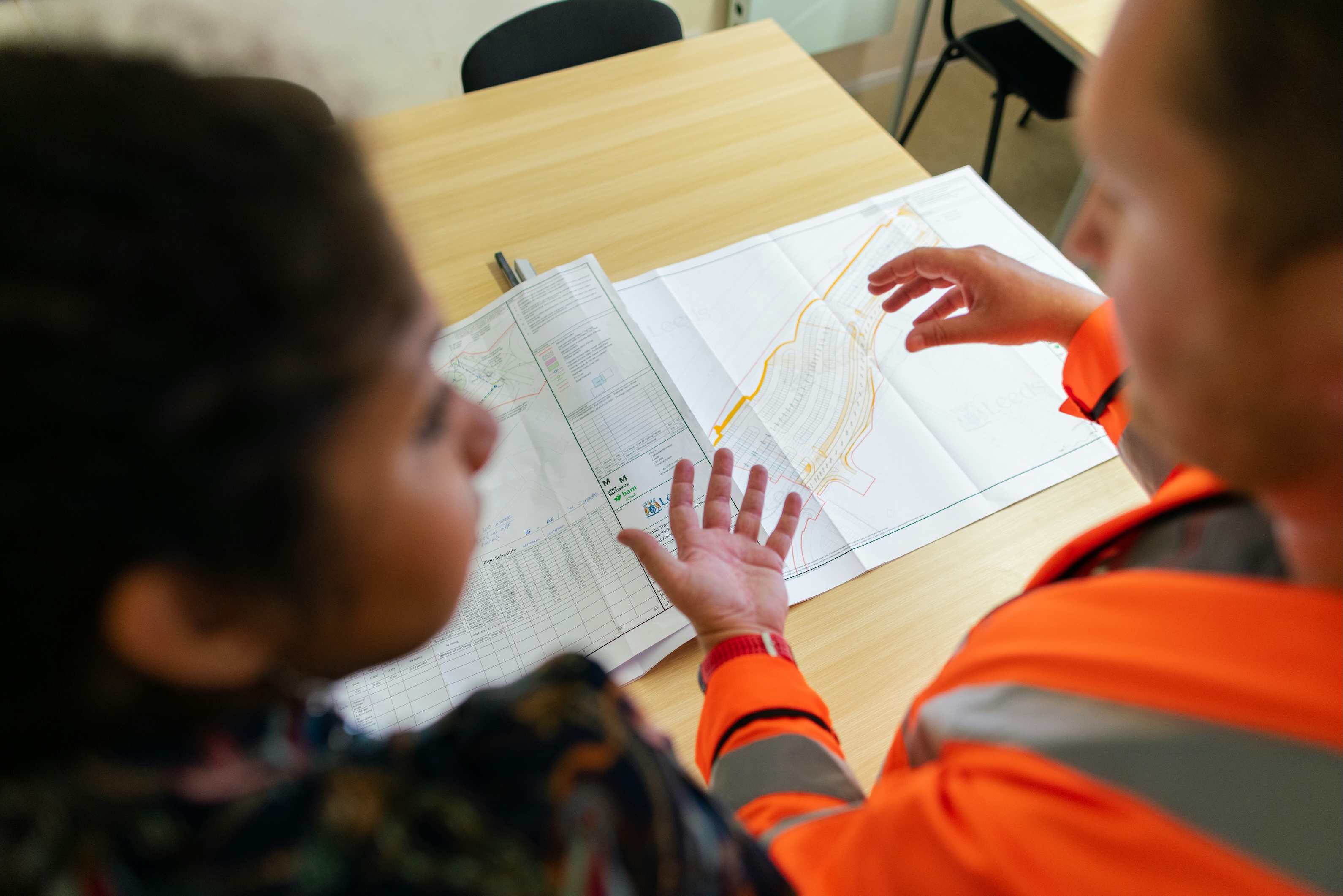
Site worker in orange hi-vis clothing reviewing printed drawings

If you need more than PPN 006

Some customers and contracts go further. The same footprint can support the other requirements you are likely to meet.

Questions people ask

Can I use last year's bills?

Yes. Most baselines use the last full financial year, as long as the records are complete.

We have no vehicles. Is it still worth doing?

Yes. Your footprint will be smaller and mostly commuting, travel and premises energy, but buyers ask regardless of size.

Do subcontractors count?

Not for the five required Scope 3 categories. Main contractors increasingly ask about them, which is where supplier engagement comes in.

Who signs the plan?

A director, after board approval. The date and their name and title appear on the plan.

What if we miss a target?

Say so in the annual update, explain why and show what you are doing about it. Buyers expect honesty more than perfection.

Does it need renewing?

Yes, every year, on the same reporting period.

What about offsets?

They have no place in the reduction projects section. If a customer asks for a carbon neutral claim later, that is a separate piece of work.

I am an electrical or M&E contractor. Is anything different?

The method is the same, but I spent 30 years in the electrical supply chain, so I know where a contractor's emissions sit and what main contractors ask for.

Support for contractors →

Where to start

Asked for a plan this week? Book a 20-minute conversation and tell me what the buyer has asked for. I will say plainly whether I can help. Not ready yet? The free checklist shows where the gaps are.